If nothing you put on your skin is working, this is why.
Your skin has a built-in protection system. When it breaks down, no amount of moisturizer, toner, or cleanser will fix it. Because you can't moisturize your way out of a structural problem.
These aren't random skin problems.
They're all the same problem.
You apply it, skin feels fine for an hour, then dry again. That's not a hydration problem. That's your barrier not holding anything in.
Products you used for years suddenly cause stinging or redness. Your skin isn't getting more sensitive. It's getting less protected.
That "clean" feeling after a face wash? That's your cleanser stripping the protective layer your skin spent hours building.
Persistent redness is your immune system reacting. Your barrier is letting irritants through that it used to block.
The more products you layer on, the more frustrated your skin becomes. Moisture from outside doesn't fix a barrier that can't hold it.
A damaged barrier accelerates visible aging. When skin can't hold moisture at the surface, it shows up as texture and lines.
None of these are your skin type. None of them are something you were born with. They're all signs of one thing: a damaged skin barrier. And in most cases, the products you're using to treat them are making the damage worse.
Your skin has layers. One of them is failing.
Select any dot on the image to see what that layer does, and what breaks down when it stops working.
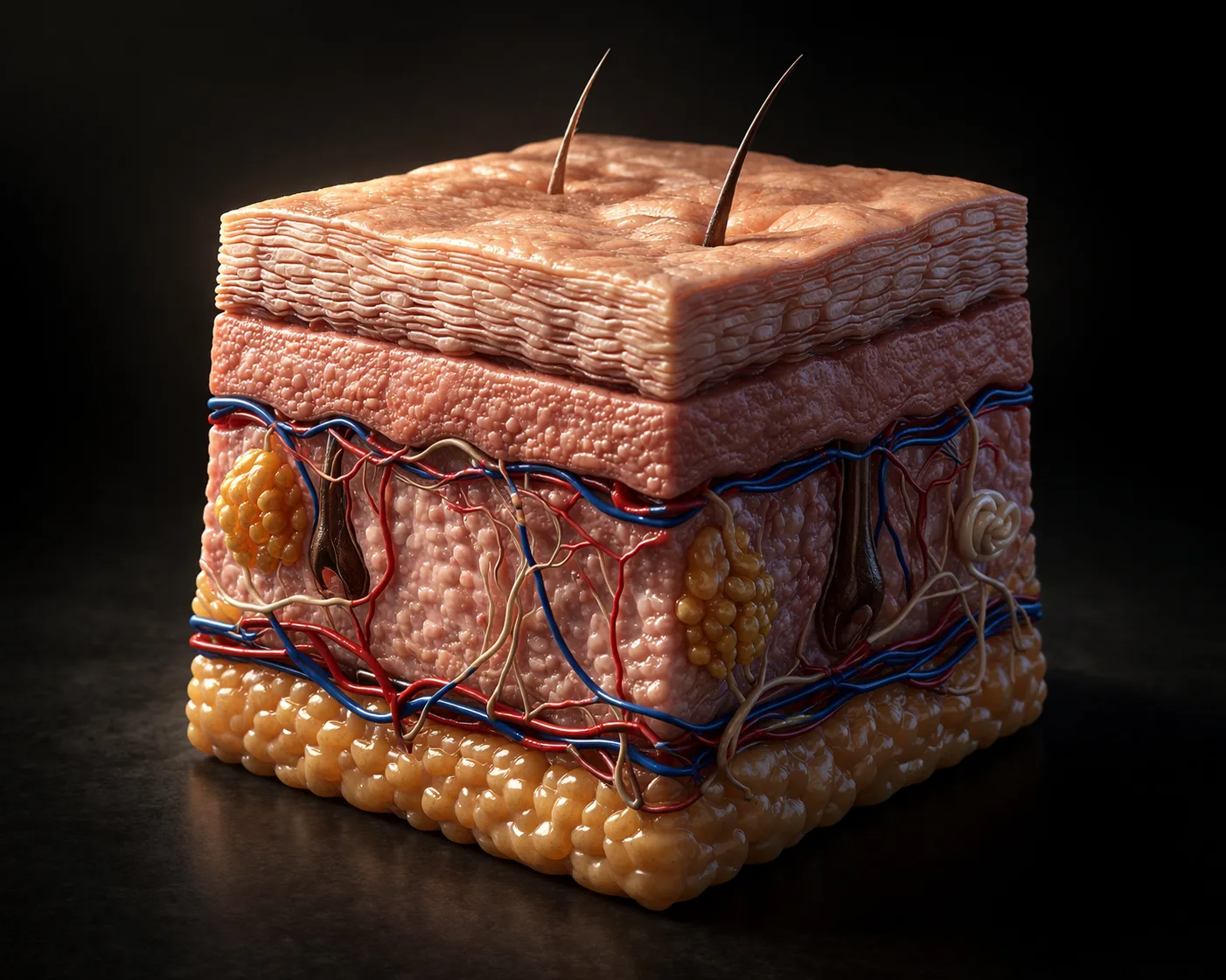
The outermost layer, about 20 cells thick, less than the width of a human hair. The cells are dead and flat, packed together like roof tiles. What holds them together is the important part: protective fats called ceramides, cholesterol, and fatty acids, arranged in precise layers between every cell. That seal is your barrier.
When it's intact, moisture stays in and irritants stay out. When it breaks down, water escapes, irritants get through, and your skin reacts to everything. This is the layer we are treating.
If you remember one thing: Your barrier is a physical seal made of fats. It doesn't respond to water or hydration serums. It responds to the right fats, in the right form, applied consistently. Everything else is surface-level.
Your skin is leaking.
You can't feel it, but you can see it.
When your barrier breaks down, moisture escapes invisibly through the gaps. Scientists call this transepidermal water loss. You call it "my moisturizer just doesn't work."
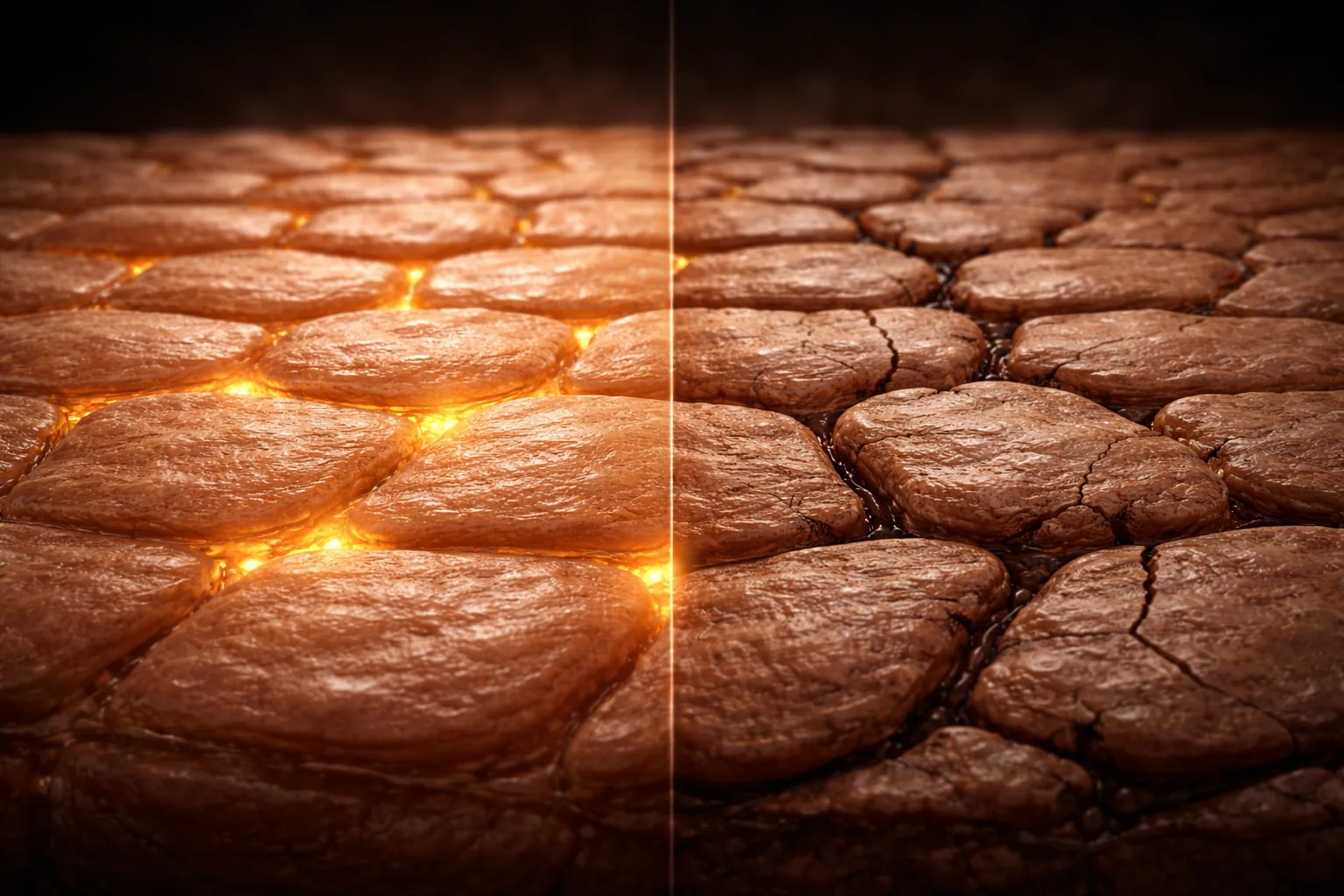
Intact barrier
The channels between cells are sealed with protective fats. Moisture stays locked in. Irritants can't penetrate. Products you apply stay effective. Your skin feels calm and balanced.
Compromised barrier
Gaps in the seal allow moisture to escape continuously. Irritants, allergens, and bacteria get through. Your immune system reacts. Products sting. Nothing holds.
A dermatologist measures barrier health with a device called a tewameter, which quantifies exactly how much moisture your skin is losing per hour. Normal skin loses less than 10 g/m²/hr. Severely compromised skin can reach 100 g/m²/hr. Most people with "dry" or "sensitive" skin are somewhere in between, with chronic subclinical barrier damage they've never had a name for.
Most barrier damage comes from the products meant to help.
You've probably used at least three of these today.
Your skin takes 6 to 8 hours to rebuild its protective layer after washing. If you wash twice a day, you're never giving it a full recovery window.
Sodium lauryl sulfate (SLS) has been shown to significantly raise moisture loss 24 hours after a single use. It selectively removes cholesterol from the barrier's protective structure.
Short-chain alcohols like ethanol dissolve fats on contact, including the protective fats in your barrier. A single application measurably reduces your skin's lipid layer.
Your skin has a natural shedding cycle that takes 14 days. Exfoliating more than twice weekly removes cells faster than your skin can replace them. The result is a chronically thinner barrier.
UV radiation oxidizes the protective fats in your barrier, breaking down their molecular structure. It also degrades squalene, your skin's natural antioxidant oil.
Low humidity increases how fast moisture evaporates. Cold temperatures slow protective fat production by up to 30%. Wind physically strips surface lipids.
What's happening between your skin cells.
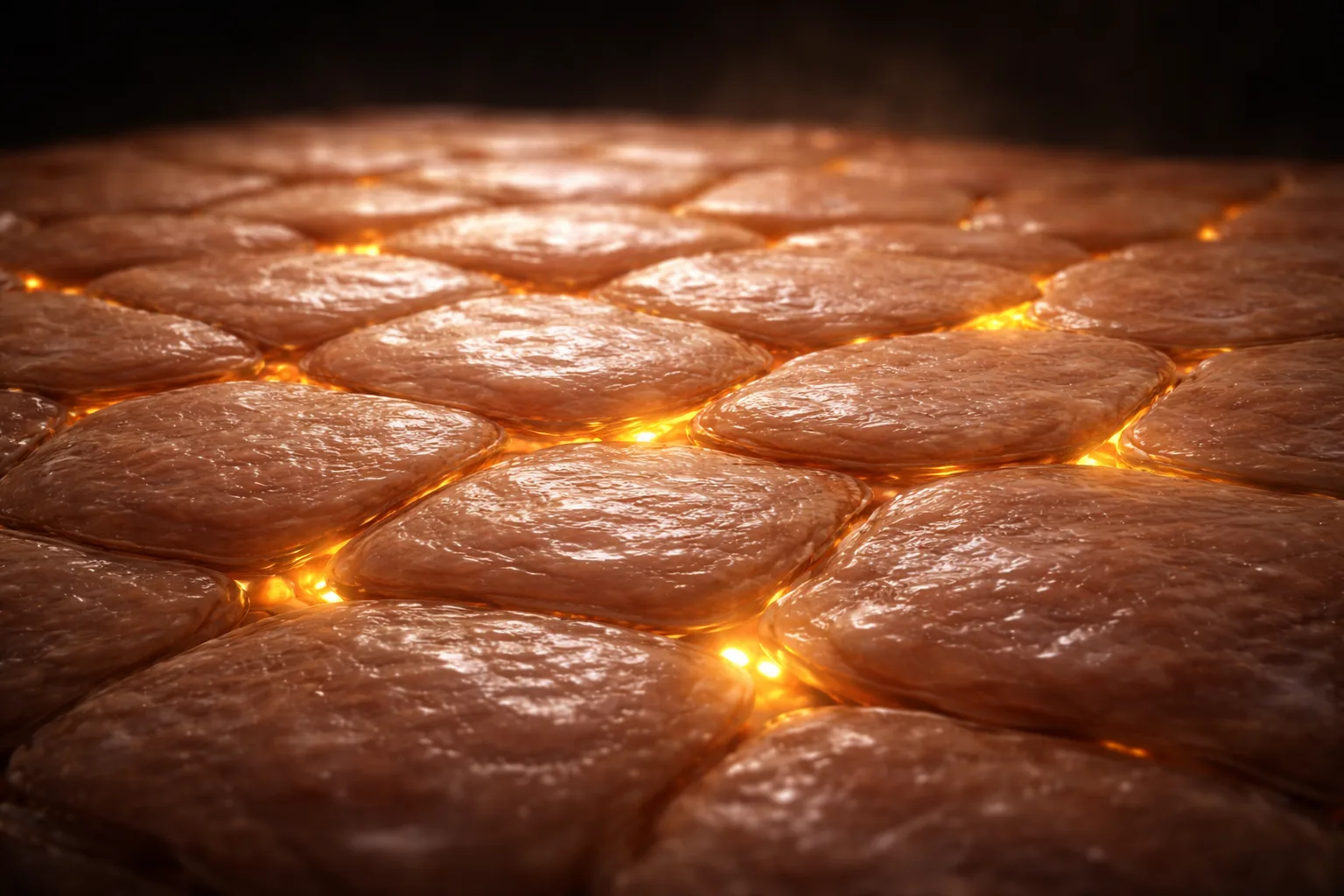
Picture a brick wall. The bricks are your dead skin cells. The mortar between them is made of three types of protective fats: ceramides, cholesterol, and fatty acids. When that mortar is intact, nothing gets through. When it's depleted, the wall cracks. Water leaks out. Irritants get in.
The critical insight: you can't add more bricks to fix it. You have to repair the mortar. That's why most moisturizers fail. They coat the surface. They don't rebuild the seal.
Most plant oils, argan, rosehip, marula, are triglycerides. They coat the surface. Jojoba is different. Chemically it's not an oil, it's a liquid wax. Its molecular structure is nearly identical to the protective wax your own skin produces. That's why it can integrate directly into the seal between cells and supplement the depleted mortar, not just add a layer on top.
Pazyar N et al. "Jojoba in dermatology: a succinct review." G Ital Dermatol Venereol. 2013;148(6):687-91.
You've been trying to fix your skin
without knowing what was broken.
Now you know. Sweetgrass No 1 was formulated around barrier science, not sensory performance. Every ingredient has a specific job inside your skin.
Shop Sweetgrass No 1Why does acne-prone skin break out?
Most acne treatments fight the symptoms: bacteria, inflammation, excess oil. They work on what's visible. But they don't address why your skin started overproducing oil and clogging pores in the first place. The answer is in the oil itself.
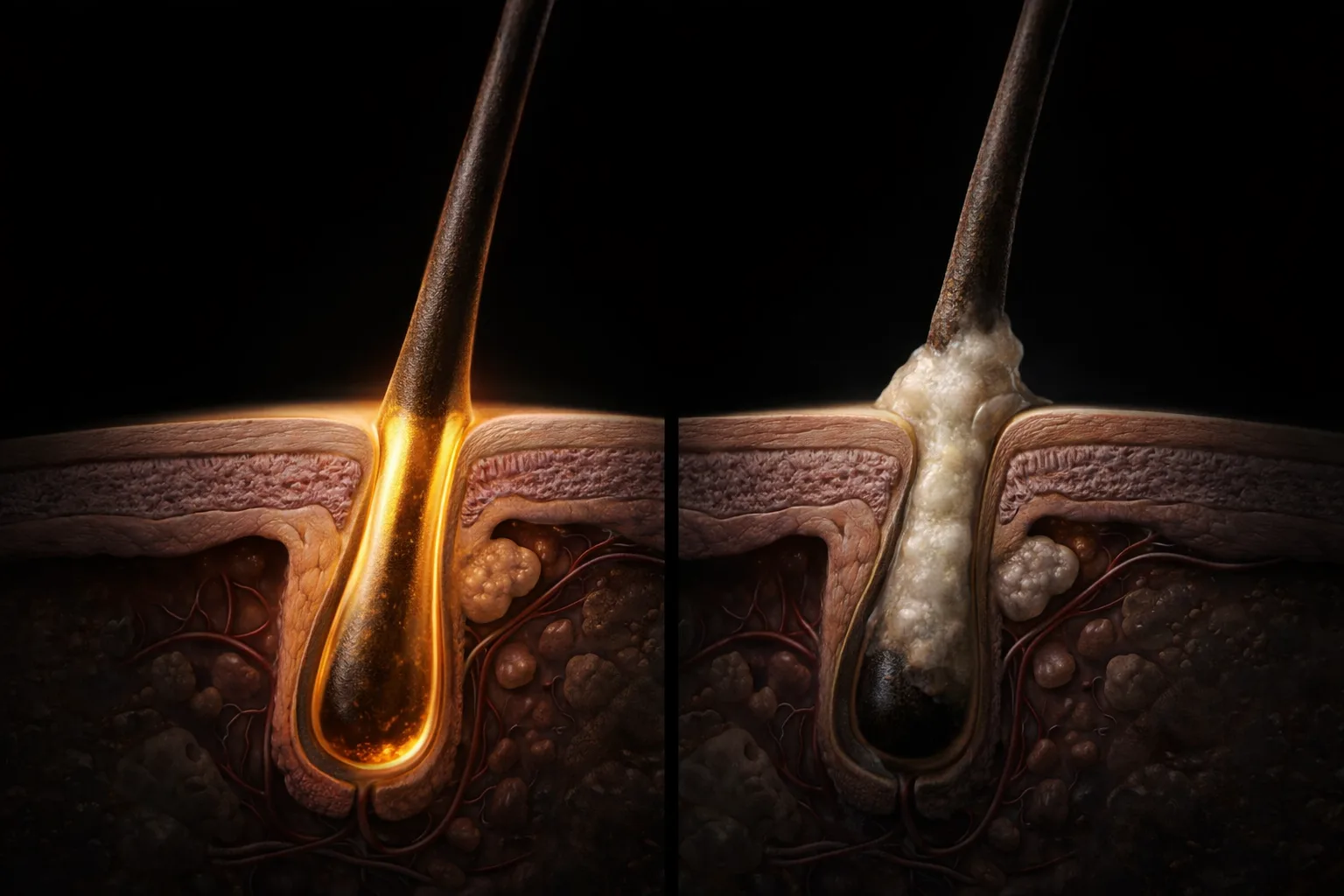
The Linoleic Acid Deficiency Theory
Research documented by the NIH shows that acne-prone skin has measurably lower concentrations of linoleic acid in its sebum compared to clear skin. This deficiency causes the sebum to become thicker and stickier, more likely to clog pores and trap bacteria.
When you restore linoleic acid topically, the sebum thins. Pores drain naturally. Comedone size decreases. The cycle of clogging and inflammation slows down.
Downing DT et al. "Essential fatty acids and acne." J Am Acad Dermatol. 1986.
What you see is the last thing that happens.
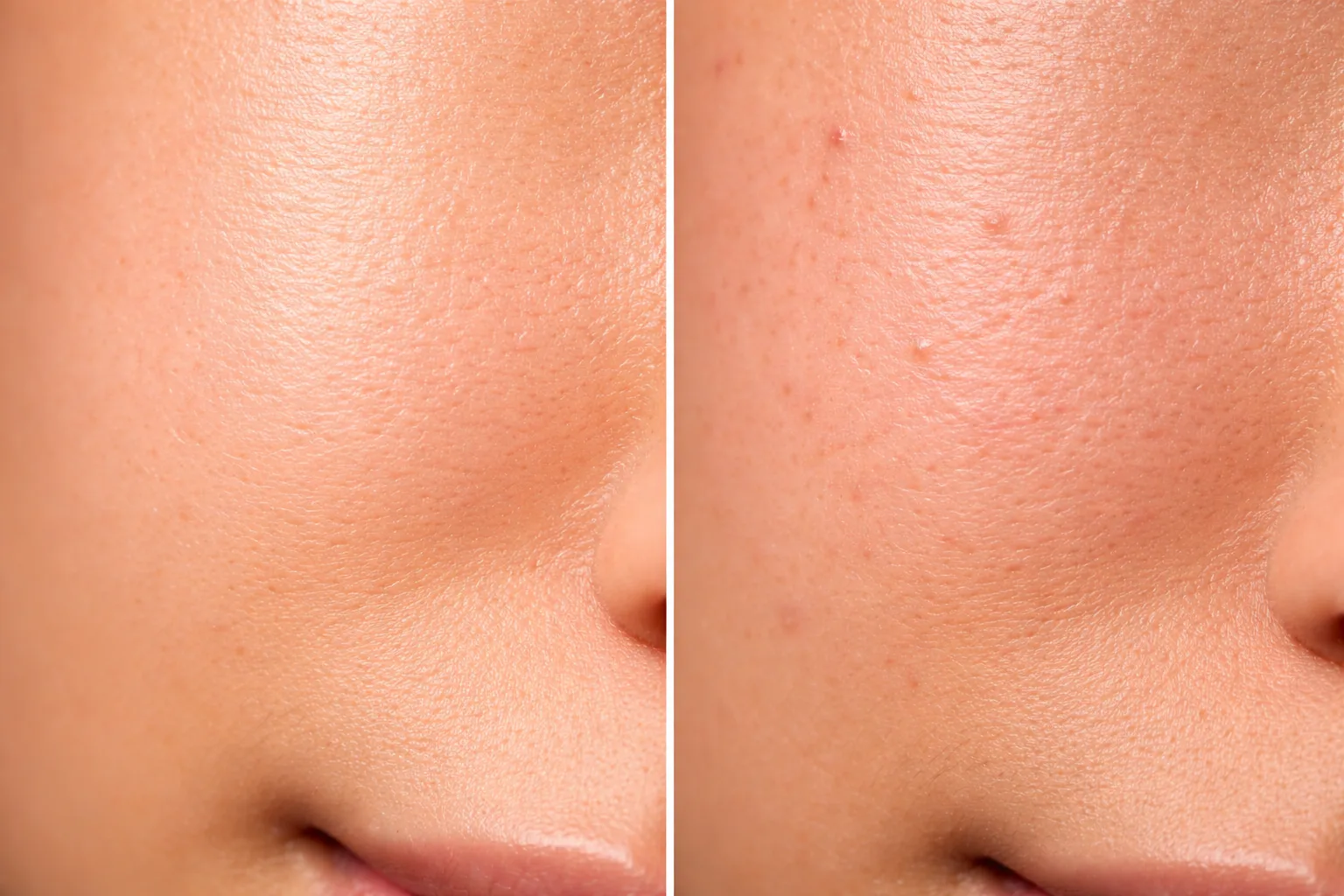
Clear skin
When linoleic acid levels are normal, sebum flows freely. Pores stay clear. The skin surface is smooth, even-toned, and calm. This is how your skin is supposed to work.
Congested skin
When linoleic acid drops, sebum thickens. Pores clog. Dead cells get trapped. Bacteria multiply. The result is visible congestion, uneven texture, and breakouts that keep cycling.
Restore what's missing. Fight what causes it.
Sage No 2 was built around two mechanisms: restoring the linoleic acid that acne-prone skin is missing, and delivering antimicrobial compounds that target the bacteria behind breakouts.
Three plant-derived carriers, grapeseed, hemp seed, and rosehip, deliver concentrated linoleic acid to thin the sebum and restore the fatty acid balance your skin needs to stop clogging.
Wild Montana silver sage (Artemisia cana) slow-macerated in squalane. Camphor and other bioactive compounds target C. acnes, the bacterium behind inflammatory breakouts.
Bakuchiol activates the same cell receptors as retinol, clearing congested pores and reducing the breakout cycle, without peeling, sensitivity, or sun restrictions.
THD Vitamin C, the oil-stable form, addresses hyperpigmentation and dark marks left behind by previous breakouts while providing antioxidant protection.
The difference: Most acne products strip oil from the surface. Sage No 2 restores the right oil to the sebum. It's not fighting your skin. It's giving your skin what it needs to stop fighting itself.
You've been fighting your skin
without addressing what's missing.
Now you know. Sage No 2 was formulated around the linoleic acid deficiency, not surface symptom control. Every ingredient has a specific job inside your skin.
Learn About Sage No 2 Shop Sage No 2Have a skin question?
Ask us anything about skin science, ingredients, barrier repair, acne, or skincare routines. Our answers are grounded in published research, not marketing.